Why Production Builders Insure Houses Under One Program
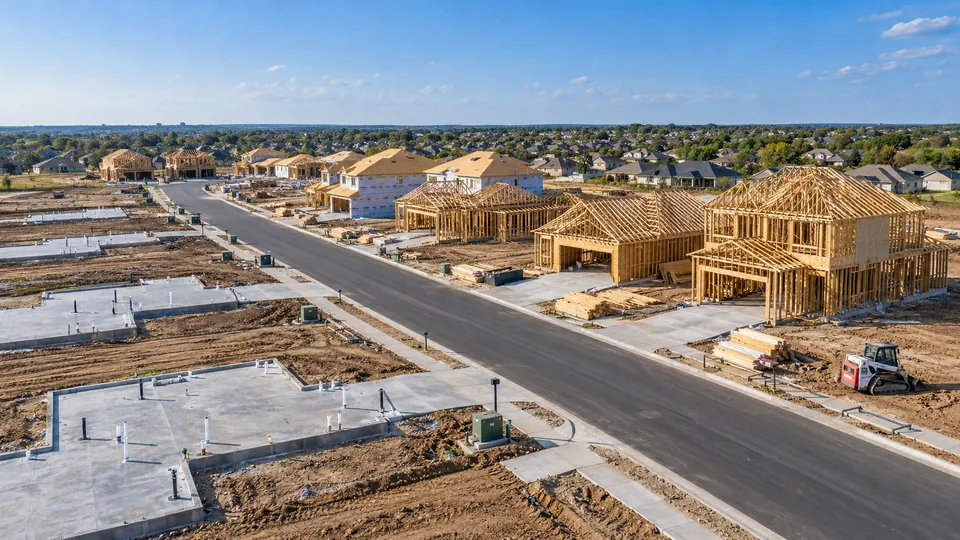
A production builder in a single community might have 40 houses at slab, 60 in framing, 30 in drywall and 20 finished and waiting for buyers, all at once. Writing a separate builders risk policy for each lot would mean hundreds of certificates, start dates and cancellations a year. Instead, builders typically buy a program policy that insures every house the builder starts in the listed communities or states, up to a per-house limit and an aggregate per location.
The structure changes the questions that matter. On a single commercial project the focus is one completed value and one end date. On a tract program the focus is the per-house limit by floor plan, how houses enter and leave the policy, how long a finished house may sit unsold and how a single catastrophe across dozens of houses is handled. The general rules on insured interests and contract wording are on the main builders risk page.
For values, insured interests and the owner-contractor allocation, start with our guide to how builders risk is structured on a project.
Reporting Forms: Declaring Houses and Values Month by Month
Most tract programs are written on a reporting basis. The builder files a report, usually monthly, listing each house started in the period with its lot, plan and completed value. It also lists houses that closed or were otherwise removed. Premium is charged on the values reported, often with a deposit at inception and an adjustment at audit. Some programs charge on starts; others charge on the average value at risk.
The report is not an administrative afterthought. Depending on the wording, a house that was started but never reported may be insured only up to a limited amount or not at all. A value reported below actual cost may also reduce what a partial loss pays. Builders with several divisions should assign one person to reconcile the starts schedule from the purchasing or scheduling system to the insurance report before it is filed.
Per-house values are usually set by floor plan and elevation, plus lot-specific options such as pools, casitas, solar or upgraded finishes. Ask whether options and structural upgrades must be reported individually or are absorbed in the plan value, and whether the policy allows a margin for cost escalation between start and completion.
Liability, defect and subcontractor questions for the same communities are in our overview of insurance for production and tract housing.
Spec Homes, Presold Homes and Completed Inventory
Builders risk is priced for houses under construction. Once a house is finished, the policy may still insure it, but often only for a stated period. Many programs carry a completed-but-unsold provision that keeps a finished spec home insured for a set number of days after completion, sometimes with tighter terms for vandalism, theft, glass breakage and water damage once the house is vacant. After that window, coverage may end or require a separate vacant dwelling or builder's inventory policy.
Presold homes raise a different question: whose interest is insured if the buyer has signed a purchase contract but escrow has not closed. Builders risk generally continues to protect the builder's interest until title passes, but the purchase agreement may shift risk of loss earlier or later. Read the risk of loss clause in your standard purchase contract against the policy's end-of-coverage wording.
Market cycles make this more than a footnote. When sales slow, inventory homes can sit finished for months. Track completion dates by lot and ask the insurer what notice or reporting is needed to keep finished inventory insured past the standard window.
For the builder's wider program beyond property, see insurance and bonds for residential builders.
Model Homes and Sales Centers Inside a Tract Program
Models are houses the builder will eventually sell, but for a year or more they are furnished, staffed and open to the public. Tract programs vary widely here. Some exclude models once they open, some allow them for a stated period with a separate per-model limit and some move them to the builder's property policy. Furnishings, artwork, signage and sales office equipment usually belong to the builder's business property, not builders risk.
Ask the insurer to list models by lot in the report and confirm their status in writing. When the community sells out and the models are sold, they leave the program like any other house, often after a refresh of finishes and a new completion date. Our partial occupancy article covers the occupancy handoff in more depth.
The occupancy condition that drives model-home terms is explained in our article on model homes and occupancy under builders risk.
Release at Closing and the Handoff to the Homeowner
In a for-sale community, the normal end of builders risk on a house is the close of escrow. The builder reports the closing, the house leaves the program and the buyer's homeowners policy takes over from the recording date. Gaps appear when the buyer moves in early under an occupancy agreement, when closing is delayed after the final walk-through or when a house closes to an investor or build-to-rent buyer that has not bound its own policy.
Bulk sales deserve their own review. When a builder sells a block of finished homes to a single-family rental operator, the purchase agreement sets the transfer date and the buyer's property program has to be bound before it. A build-to-rent developer building homes to hold, rather than sell, needs a different structure, because there is no closing to end coverage house by house.
Homes built to hold rather than sell are covered on our page for build-to-rent developer insurance.
Theft, Vacancy and One Event Across Many Houses
Tract communities are open sites with many houses empty at night. Appliance, HVAC condenser and copper wiring theft are recurring losses, and many programs limit theft of materials not yet installed or require fencing, lighting or cameras in the phase. Read whether installed appliances count as part of the house or as stored materials until the house closes.
The larger financial question is a single event that damages many houses. A hailstorm across a North Texas phase, a wind event during roofing in metro Phoenix or a wildfire at the edge of an inland California community can touch dozens of lots in an afternoon. Ask whether the deductible applies per house, per occurrence or per location, and whether there is an aggregate cap on deductibles for one event. On the Texas coast, properties in the 14 coastal counties and parts of Harris County east of Highway 146 sit in a designated catastrophe area where new homes typically need a TDI windstorm certificate of compliance to qualify for a TWIA policy after closing, so inspections during construction affect both the builder's schedule and the buyer's insurance.
Flood is often excluded or sublimited. Check the effective FEMA flood zone for each phase, since a subdivision can straddle a mapped special flood hazard area even when most lots sit outside it.
Coastal windstorm and other state-specific rules for builders are summarized on our page for Texas construction insurance and bond requirements.
Streets, Utilities and Lenders on a Tract Program
Builders risk on homes usually does not extend to the streets, water and sewer mains, storm drains and walls the developer builds for the subdivision. Those improvements are often secured to the city or county with a subdivision improvement bond, which is a credit instrument protecting the agency, not property insurance on the work. Damage to an unfinished street or storm drain is a separate question for the site contractor's program or a policy written for the horizontal work.
Lenders on vertical construction loans often finance houses in groups or by lot release. Each lender may want to appear as mortgagee or loss payee on the houses it funds, which means the reporting system needs a lender field by lot. Check that certificates can be issued per lot or per takedown without delay.
Public improvements are usually secured separately; see our guide to subdivision improvement bonds for streets and utilities.
Before You Ask for a Quote
What to Gather
- Annual starts and closings by community, with average completed value by floor plan
- Current monthly starts report reconciled to the purchasing or scheduling system
- Finished inventory list with completion dates and days on market
- Model home and sales center list by lot, with furnishings values
- Standard home purchase agreement, including the risk of loss clause
- Vertical lender list by community and the mortgagee wording each requires
What to Ask the Insurer or Surety
- How are unreported starts treated, and is there a grace period for late reports?
- How long does a completed unsold house stay insured, and on what terms?
- Are model homes included while open to the public, and are furnishings excluded?
- Does the deductible apply per house or per occurrence, and is there an aggregate cap for one event?
- When exactly does coverage on a house end: closing, recording, occupancy or another event?
- How are wildfire, hail, named storm and flood treated by community?
Quick Answer
Tract builders usually insure homes under one reporting-form builders risk program that adds each house at start and removes it at closing. The monthly report, completed-inventory terms, model-home terms and per-event deductibles typically decide how a loss is paid.
Common Mistake
Treating the monthly starts report as paperwork. A house left off the report, or reported below its real cost, may be insured only partly or not at all under some forms.
Broker Perspective
We reconcile the builder's starts data to the insurance report and test one storm across a full phase against the deductible wording before renewal, because that is where tract claims are won or lost.
Coverage Impact
Accurate reporting and a per-occurrence deductible cap can change the outcome of a multi-house event. Vacancy limits and model-home exclusions may narrow coverage on finished homes unless they are addressed in the program.
Questions Buyers Ask
What happens if a house starts but never makes it onto the builders risk report?
It depends on the program's wording. Some reporting forms insure unreported starts up to a limited amount for a short grace period, while others treat them as outside the policy. Either way, a missed house can be a gap. Tie the report to the scheduling system's start dates and ask the insurer to state the grace terms in writing.
How long can a finished spec home sit unsold and stay on builders risk?
Many tract programs keep a completed, unsold home insured for a stated number of days after completion, often with narrower terms for theft, vandalism and water while vacant. Past that window, coverage may end or require a vacant dwelling or inventory policy. Ask for the exact period and the notice needed to extend it.
Does one hailstorm across a phase mean one deductible or one per house?
That depends on how the deductible is written. Per-house deductibles can add up quickly when dozens of homes are damaged by the same storm, while a per-occurrence deductible or an aggregate cap limits the builder's share. This is one of the most important terms to compare between tract programs.
When should builders risk on a sold tract home end?
Usually at the close of escrow, when title passes and the buyer's homeowners policy begins. Early move-in agreements, delayed closings and bulk sales to rental operators can shift that date, so match the policy's end-of-coverage wording to the purchase agreement and confirm the buyer's coverage is bound before handing over keys.
Official Sources
- Texas Department of Insurance, Do I need a windstorm inspection?, Texas Department of Insurance. 14 coastal counties and parts of Harris County east of Highway 146 are a designated catastrophe area; most new construction needs an inspection and certificate of compliance; a TWIA policy generally requires one. Verified 2026-10-24.
- FEMA Flood Map Service Center, Federal Emergency Management Agency. Official source for effective flood maps used to check each phase's flood zone. Verified 2026-10-24.
- NFPA Construction Site Fire Safety Fact Sheet (NFPA 241), National Fire Protection Association. Construction sites are often unsecured and vulnerable to trespass, theft, vandalism and intentionally set fires; sites must be safeguarded around the clock; NFPA 241 is referenced by the IRC. Verified 2026-10-24.
Reviewed by the Principal, Gleason Insurance Brokers, LLCUpdated