Why the General Liability Policy Usually Stops at Pollution
A standard commercial general liability form carries a pollution exclusion with narrow exceptions, and many insurers writing contractors replace it with a broader total pollution exclusion endorsement. Under the broader version, the remaining carve-backs for things like hostile fire or building heating equipment can disappear. The practical result is that a sediment discharge, a diesel spill from a staged excavator or a drilling fluid release may fall outside the GL policy entirely.
Contractors often discover this only after a claim, because the certificate of insurance shows a GL limit and says nothing about the exclusion schedule. The certificate is a summary. The policy and its endorsement list decide the answer, and on many programs the pollution wording sits in an endorsement that never appears on the certificate.
Some programs add a limited pollution give-back to the GL form, such as a short-duration release exception or a hostile fire exception. These carve-backs vary by insurer and are typically narrow in time, scope or limit. Treat them as a partial patch, not a substitute for a stand-alone pollution form on dirt, drilling or demolition work.
Pollution sits beside the core liability placement, so it is worth reviewing alongside your project-specific general liability and excess.
What to Read in the Actual CPL Wording
| What happened | General liability | Commercial auto | Contractors pollution liability |
|---|---|---|---|
| A release from your operations at the job site | Typically removed by the pollution exclusion | Not usually involved | The core grant for covered operations, depending on the form |
| A spill of the load a truck is hauling | Typically removed by the auto and pollution exclusions | Commonly excludes pollution from cargo, while fuel for the vehicle's own operation may be preserved | A transportation pollution endorsement, if one is added |
| A release at a landfill or disposal site you do not own | Typically removed by the pollution exclusion | Not usually involved | A non-owned disposal site endorsement, often limited to approved or scheduled sites |
| Contamination already in the ground that your work spreads | Typically removed by the pollution exclusion | Not usually involved | May respond to the spread your covered work causes; the pre-existing condition itself usually belongs to the owner's site pollution policy |
| Fines and penalties from a regulator | Commonly outside the policy | Commonly outside the policy | Commonly outside the policy |
A CPL policy is built around a defined term, usually something like pollution conditions, and a defined set of covered operations. Read both. The pollution definition determines whether mold, fungi, bacteria, silt, petroleum, drilling mud and disturbed asbestos or lead are inside the form. The covered operations definition determines whether the policy responds only to the work listed in the application or to all of your operations.
Next, look at what the insuring agreement may pay for. Many CPL forms address third-party bodily injury and property damage, cleanup costs and defense. Some address cleanup only when a government orders it, and others extend to voluntary or emergency cleanup. Whether defense costs sit inside or outside the limit changes how much limit is left for the loss itself.
Existing contamination is the most negotiated point. Most CPL forms are not designed to pay for contamination that was already in the ground, but many may respond when your work disturbs, spreads or aggravates it. Ask how the form treats known conditions, because a Phase I or Phase II report delivered at bid time may be read as knowledge of the condition.
- Pollution conditions definition, including mold, fungi and bacteria
- Covered operations: scheduled projects or all operations
- Cleanup trigger: government order, voluntary or emergency
- Defense inside or outside the limit
- Known conditions, prior work and professional services exclusions
How operations, retroactive dates and endorsements move the premium is explained in what drives contractors pollution liability pricing.
Sitework, Grading and Disturbed Ground
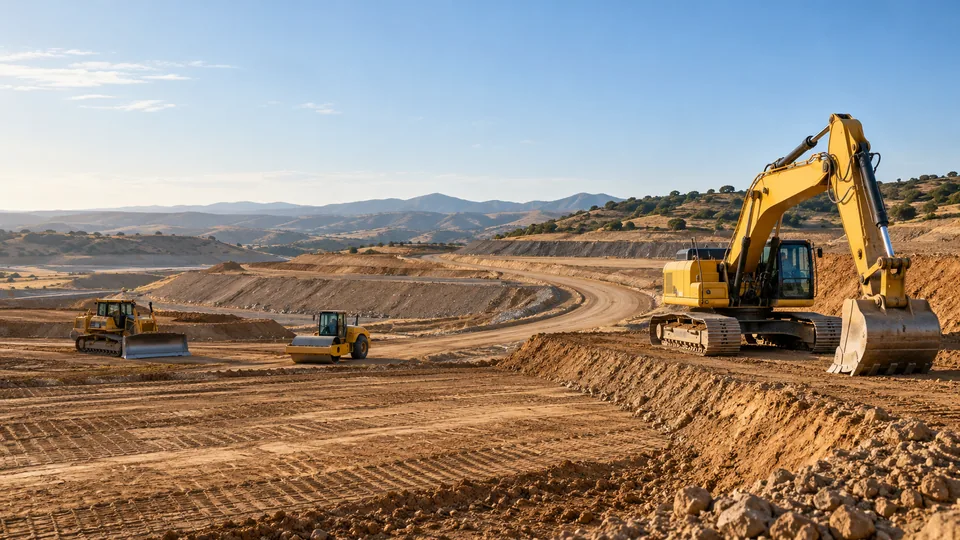
Mass grading, trenching and import or export of fill move soil that nobody has fully characterized. A grading contractor can open up buried debris, petroleum-stained soil or an old septic system, and the resulting spread across the pad or into a storm drain inlet becomes a pollution event on top of a schedule problem. A CPL form that addresses disturbance of existing conditions is the usual answer, subject to its exclusions.
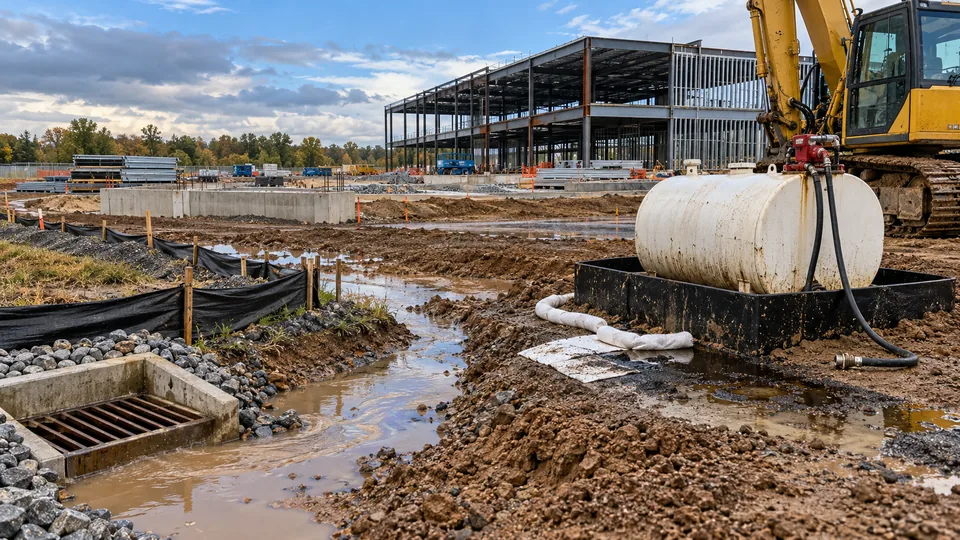
Sediment is the everyday exposure. A failed silt fence or an overtopped basin after a storm can send turbid water onto a neighbor's property or into a channel, and the downstream owner may claim property damage while a regulator separately pursues the permit violation. The insurance question and the regulatory question run on different tracks with different outcomes.
Fuel and fluids round out the list. Staged equipment, temporary fuel tanks, concrete washout and hydraulic line failures are common sources. Ask whether the CPL form treats a release from your own equipment on site differently from a release in transit, because many forms split the two.
Grading, utility and street work on a new subdivision raise these issues together, which is why they also appear in subdivision site improvement insurance and bonds.
Drilling Fluid, Underground Utilities and Directional Drilling
Horizontal directional drilling uses pressurized drilling fluid, typically a bentonite slurry with additives, to carry cuttings out of the bore. When the fluid finds a path to the surface or into a waterway, the inadvertent return can reach a creek, wetland or neighboring parcel. Owners and agencies often require a frac-out contingency plan, and a release can lead to cleanup demands and third-party claims at the same time.
Underground utility work adds a second set of exposures. Striking a sewer force main, a fuel line or a gas service can release material that the contractor did not own but did cause to escape. A GL policy may respond to the physical damage to the line itself while excluding the pollution consequences, so the CPL wording carries the rest.
Water, sewer and storm drain contractors also work inside contaminated corridors in older areas, where dewatering can draw impacted groundwater into the trench. Ask whether dewatering discharge is a covered operation and whether the form addresses groundwater as well as soil.
Who pays after a dig-in, and how the one-call rules shape the answer, is covered in our article on utility strikes, one-call law and insurance.
Hauling, Transportation and the Non-Owned Disposal Site
Pollution exposure follows the load off site. Spoils, contaminated soil, drilling cuttings and demolition debris are often trucked to a landfill or recycler, and a spill on the road may fall between the auto policy and the CPL policy. Commercial auto forms commonly limit pollution from cargo, so transportation pollution is usually added to the CPL form by endorsement or written on a separate policy.
Disposal sites carry a longer tail. Under the federal Superfund statute, liability for cleanup costs at a facility can reach a person who arranged for disposal of hazardous substances there and a transporter who selected the site, not only the facility owner. A contractor or developer whose waste ended up at a site that later becomes a cleanup project may be pulled in years after the job closed.
Non-owned disposal site coverage is the CPL endorsement built for that tail. It is often limited to sites that were properly permitted when the waste arrived, and some insurers require the sites to be scheduled. Keep the manifests, tickets and receiving-facility names from every load, because they decide whether a later claim fits the endorsement.
For contractor-owned haul trucks themselves, see coverage for the trucks that do the hauling.
How hauling exposures are insured is explained under transportation pollution liability (TPL).
Occurrence or Claims-Made, and Why It Matters After Closeout
CPL is written on both occurrence and claims-made triggers. An occurrence form generally responds to a pollution condition that happens during the policy period, even if the claim arrives later. A claims-made form generally responds only to claims first made while the policy is in force, subject to a retroactive date that marks the earliest work it will consider.
Pollution claims often surface late. Contamination migrates, a downstream owner tests a well, or an agency traces a release back to a project. On a claims-made form, letting the policy lapse or moving the retroactive date forward can leave earlier work with nothing to respond. An extended reporting period may buy time to report claims, and its length and cost are set by the form.
Developers and GCs on a single large job often prefer a policy written for that project with its own term and a defined reporting tail. That structure keeps the limit dedicated to the site instead of shared with every other job a contractor runs that year.
Term, reporting tail and who is insured are the core of project-specific pollution policies for developers and GCs.
Stormwater Permits in CA, TX, AZ and NV Are Not Insurance
Construction that disturbs one acre or more, or less than an acre within a larger common plan of development, generally needs Clean Water Act stormwater permit coverage. In California, Texas, Arizona and Nevada that permit is issued by the state. California's construction general permit is State Water Board Order 2022-0057-DWQ, in effect since September 1, 2023. It expects site plans developed and run by certified stormwater professionals.
Texas uses TCEQ general permit TXR150000, effective March 5, 2023, through March 5, 2028, which treats sites disturbing five acres or more as large sites and one to five acres as small sites. Arizona's ADEQ issued AZPDES permit AZG2025-001, effective August 29, 2025, replacing the 2020 permit. ADEQ requires a stormwater pollution prevention plan before the notice of intent is filed, and the permit also reaches temporary concrete or asphalt plants set up only for the project. Nevada's NDEP covers construction sites of one acre or more, or within a larger common plan, under general permit NVR100000 and expects the stormwater pollution prevention plan before the notice of intent.
None of these permits transfers risk. They set duties, inspections and records. An operator who misses them faces enforcement regardless of what insurance is in place. Pollution policies often exclude fines and penalties, and a permit violation does not by itself trigger a policy. What a CPL policy may address is the third-party damage and cleanup when a discharge escapes, which is why owners usually ask for both a compliant plan and the policy.
Paving contractors that set up temporary asphalt or concrete plants may need coverage under these permits; see our page on insurance and bonds for asphalt paving contractors.
Contract Requirements, Additional Insureds and the Certificate
Owner and lender contracts increasingly name a CPL limit, ask for additional insured status for the owner and its lender, and require the policy to be primary and noncontributory. Those terms are only as good as the endorsements behind them. A blanket additional insured endorsement on a CPL form may be limited to ongoing operations or to claims caused by the named insured's work, which can leave the owner with less than the contract implies.
On a wrapped project, pollution may or may not be inside the controlled program. Some owner-controlled programs buy a project pollution policy, and others leave pollution to each enrolled contractor. Read the wrap manual for the word pollution before assuming either answer, and keep your own practice policy active for work outside the wrap.
How pollution fits a controlled program is part of any review of OCIP and CCIP wrap-up programs.
Before You Ask for a Quote
What to Gather
- The GL policy's full endorsement schedule, including any pollution exclusion or give-back
- Current CPL declarations, trigger, retroactive date and covered operations wording
- Phase I or Phase II reports and any soil or groundwater data for the site
- The stormwater permit coverage record, SWPPP and inspection logs
- Hauling plan, receiving facilities and disposal manifests or tickets
- Owner, lender and wrap manual insurance exhibits that mention pollution
What to Ask the Insurer or Surety
- Does the pollution conditions definition include mold, drilling fluid and disturbed existing contamination?
- Is the policy occurrence or claims-made, and what is the retroactive date?
- Is transportation pollution included, and does the auto policy leave a gap for cargo?
- Is non-owned disposal site coverage included, and must sites be scheduled?
- Are defense costs inside or outside the limit?
- What does the additional insured endorsement grant the owner and lender?
Quick Answer
Most GL policies exclude pollution, so construction pollution exposures usually depend on a separate contractors pollution liability policy and its endorsements for hauling and disposal.
Common Mistake
Relying on a certificate that shows a GL limit, without reading the total pollution endorsement behind it, can leave a sediment or fuel release with no policy that responds.
Broker Perspective
A broker reads the pollution definition, the covered operations clause and the known-conditions exclusion against the site reports before comparing any limits.
Coverage Impact
Coverage typically depends on the trigger, the treatment of existing contamination and whether transportation and disposal endorsements are attached; fines and penalties are often excluded.
Questions Buyers Ask
My GL policy has a pollution exclusion. Does that mean a diesel spill on my site isn't insured?
Often it does. Many contractors' GL forms carry a broad pollution exclusion, and some add a total pollution endorsement that removes the narrow exceptions. A diesel release from staged equipment may then fall outside the GL policy. A contractors pollution policy may respond, depending on its definitions and whether on-site equipment releases are within covered operations.
Will a CPL policy pay to clean up contamination that was already in the ground before we started?
Usually not for the pre-existing condition itself. Many CPL forms may respond when your operations disturb, spread or worsen existing contamination, but they are not built to fund remediation of a site's history. Known-conditions exclusions matter here, so share Phase I and Phase II findings during underwriting and ask how the form treats them.
Do I need pollution coverage for trucks hauling dirt off a jobsite?
It is worth checking. Commercial auto forms commonly limit pollution from the cargo being hauled, so a spill of contaminated soil or drilling cuttings on the road may sit between the auto and CPL policies. Transportation pollution is usually added to the CPL form by endorsement, or written separately for a contractor that runs its own trucks.
Is a frac-out from directional drilling a pollution claim?
It can be. An inadvertent return of bentonite drilling fluid into a creek or wetland can lead to cleanup demands and third-party property damage claims. Whether a policy responds depends on whether drilling fluid fits the pollution definition, whether HDD work is a covered operation and whether the cleanup trigger includes owner or agency demands.
We have a SWPPP and a stormwater permit. Why would we still need pollution liability?
The permit sets duties and inspections; it does not pay anyone. If a basin overtops and sediment damages a neighbor's property, the permit record may help show diligence but will not fund cleanup or defense. A CPL policy may respond to that third-party loss, while permit enforcement and penalties typically stay with the operator.
Official Sources
- Construction sites one acre or more (NVR100000), Nevada Division of Environmental Protection. One-acre and common plan coverage trigger, SWPPP before NOI, administratively continued 2015 permit Verified 2026-10-25.
- EPA, Stormwater Discharges from Construction Activities, U.S. Environmental Protection Agency. Construction disturbing 1 acre or more, or less than 1 acre within a larger common plan, needs Clean Water Act stormwater permit coverage; EPA's CGP applies where EPA is the permitting authority. Verified 2026-10-23.
- State Water Board, Construction Stormwater Program (Order 2022-0057-DWQ), California State Water Resources Control Board. California CGP Order 2022-0057-DWQ adopted September 8, 2022, and effective September 1, 2023; 1-acre and common plan threshold. Verified 2026-10-23.
- 2022 CGP reissuance page (QSD and QSP professionals), California State Water Resources Control Board. The permit expects SWPPPs developed and implemented by certified stormwater professionals (QSDs and QSPs). Verified 2026-10-23.
- TCEQ, Stormwater Permits for Construction Activities (TXR150000), Texas Commission on Environmental Quality. TXR150000 effective March 5, 2023, expiring March 5, 2028; large sites 5+ acres, small sites 1 to 5 acres; SWPPP before construction. Verified 2026-10-23.
- ADEQ, AZPDES Construction General Permit (AZG2025-001), Arizona Department of Environmental Quality. AZG2025-001 effective August 29, 2025, replacing AZG2020-001; 1-acre threshold; concrete or asphalt support plants; SWPPP required before the NOI. Verified 2026-10-23.
- 42 U.S.C. §9607(a) (CERCLA liability), U.S. Government Publishing Office. Persons who arranged for disposal of hazardous substances and transporters who selected the site can be liable for response costs, supporting the disposal-site tail. Verified 2026-10-23.
Reviewed by the Principal, Gleason Insurance Brokers, LLCUpdated