Why Utility Work Produces Pollution Claims from Other People's Material
A grading contractor's pollution risk is mostly sediment and its own fuel. An underground utility contractor works beside live systems carrying sewage, natural gas, petroleum product and treated water, so the substance that escapes usually belongs to the operator of the line. The contractor did not own it, did not store it and may never have seen it, yet the release traces back to its bucket, saw or pipe-bursting head.
That ownership gap matters because pollution policies and exclusions are written around discharge, dispersal, release or escape of pollutants, not around who owned them. Under a broad GL pollution exclusion, sewage pouring from a crushed lateral can be treated the same way as diesel leaking from the contractor's own excavator. Under a contractors pollution liability form, the question becomes whether the release is a pollution condition resulting from covered operations, which is why the description of operations on the application should name utility installation, repair, tie-ins and bypass pumping in plain words.
The parent page on contractors pollution liability explains the general mechanics of CPL forms, triggers and hauling endorsements. This page applies them to the five places an underground crew most often meets a release: struck lines, sewer work, contaminated corridors, dewatering and old pipe materials.
Start with the basics of how contractors pollution liability forms are built.
Struck Lines: One Event, Two Coverage Questions
When a crew punctures a gas service, a petroleum product line or a sewer force main, the operator's repair invoice for the pipe itself is usually framed as third-party property damage. That is the part a contractor's GL policy may address, subject to any explosion, collapse and underground exclusion on the form. What follows is different. Evacuation, soil excavation around the break, vacuum truck time, storm drain cleaning and claims from neighbors whose yards or basements took the release are pollution costs that a GL pollution exclusion can remove.
Contractors pollution liability can fill the second half when its definitions line up. Ask the underwriter three questions directly: whether a release from a third-party line the contractor strikes is a pollution condition resulting from covered operations, whether emergency response costs incurred before any agency order are inside the cleanup grant and how the CPL deductible interacts with the GL deductible when one strike produces claims under both. Some carriers write GL and CPL together, which can reduce disputes about which policy goes first. Separate carriers can work too, but the program should be reviewed as a pair.
Oil and petroleum strikes carry a federal reporting layer. EPA's rule at 40 CFR 110.3 treats an oil discharge that causes a film or sheen on water or adjoining shorelines as a harmful quantity, and 40 CFR 110.6 requires the person in charge to notify the National Response Center immediately. A struck product line beside a drainage channel can reach that threshold quickly, and the notice record becomes part of the claim file.
The liability side of the same event is covered in how one-call records decide who pays after a strike.
Sewer Tie-Ins, Bypass Pumping and Sewage Releases
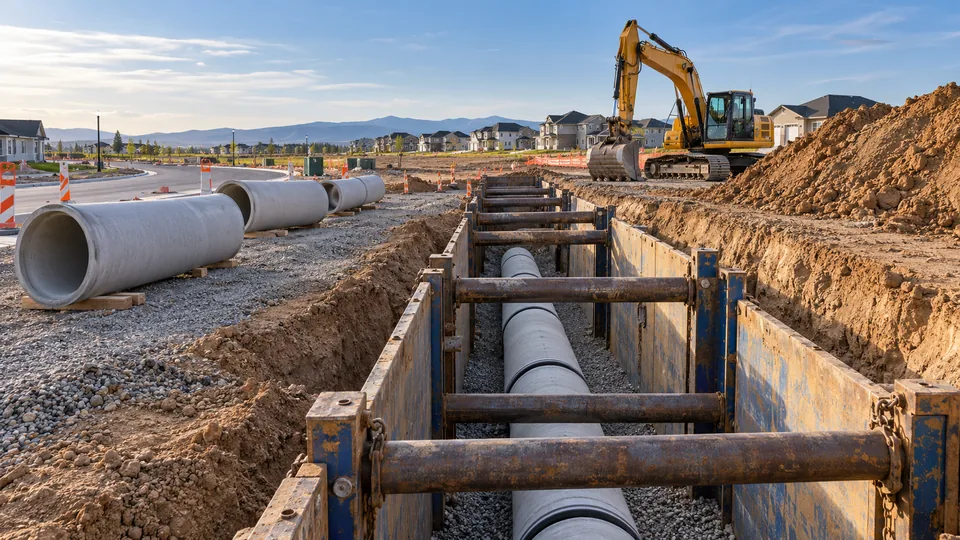
Sewer replacement and rehabilitation work creates planned exposure to sewage. Bypass pumping moves live flow around the work zone through temporary pumps and hoses, and a failed coupling, a pump that runs out of fuel overnight or a plug that lets go during a tie-in can send raw sewage into streets, storm drains and nearby buildings. Many GL forms treat that discharge as a pollution event, and some contractors learn this only after the first claim from a flooded business.
The public agency usually carries the regulatory duty. In California, State Water Board Order WQ 2022-0103-DWQ, the statewide general waste discharge requirements for sanitary sewer systems, took effect June 5, 2023, and requires public agencies that own or operate sewer systems to manage them under sewer system management plans and report spills. A contractor-caused spill still lands on the agency's record, and agencies commonly pass the cost back through the contract's indemnity clause. In Texas, Water Code §26.039 requires the person operating or responsible for an activity that causes an accidental discharge or spill to notify TCEQ as soon as possible and not later than 24 hours after it occurs.
For coverage, ask whether bypass pumping is a covered operation, whether the CPL form addresses sewage and other biological material inside its pollutant definition and whether the agency is an additional insured on the pollution policy as well as the GL. Agency exhibits for sewer work increasingly name a pollution limit, and the exhibit should be matched to the actual endorsement before the bypass plan is submitted.
The same agency contracts also carry statutory bonds on public sewer contracts.
Contaminated Soil in Old Rights-of-Way and the Spoils That Leave the Job
Utility corridors in older commercial streets often sit beside former service stations, dry cleaners, rail spurs and industrial lots. Trenching through those corridors can open petroleum-stained or solvent-impacted soil that nobody characterized during design. The contractor did not create the contamination, but its excavation can spread it, and the stockpile, the trench backfill and the truckload headed to a landfill all become part of the exposure.
Most CPL forms are not designed to pay for remediating contamination that was already present. Many may respond when the contractor's work disturbs, spreads or aggravates it, which is the realistic utility scenario. Known-conditions language matters here: a Phase I or Phase II report included in the bid documents can be read as knowledge of the condition, so share it with the underwriter and ask how the form treats it. The contract should also say who characterizes suspect soil, who pays for disposal and who stops work when the first truck is rejected at the receiving facility.
Spoils transportation is the other half. Commercial auto forms commonly limit pollution from cargo, so a spill of impacted soil on the road may sit between the auto policy and the CPL policy unless transportation pollution is endorsed. Non-owned disposal site coverage addresses the long tail when a receiving facility later becomes a cleanup site, and it usually depends on keeping manifests and scale tickets for every load.
For what the auto side typically responds to, see how commercial auto liability works for California contractors.
Large corridor jobs sometimes justify a pollution policy dedicated to one corridor project.
Dewatering, Impacted Groundwater and the Discharge Hose
Deep sewer and storm trenches below the water table need dewatering, and the pumped water has to go somewhere. In an impacted corridor, the well points can draw contaminated groundwater toward the trench and the discharge line can carry it to a storm drain or a sanitary connection. The contractor then holds two exposures: third-party claims if the plume shifts toward a neighbor's property and regulatory exposure if the discharge violates a permit or the receiving system's limits.
The permit layer differs by state. Arizona's A.R.S. §49-255.01 provides that a person shall not discharge except in conformance with a permit issued or authorized under the AZPDES program, and Texas Water Code §26.121 prohibits discharges into or adjacent to water in the state except as TCEQ authorizes. California regional water boards handle dewatering discharges through their own permits. Permits set duties, they do not transfer risk, and fines and penalties are commonly excluded from pollution policies.
On the insurance side, ask whether dewatering and discharge are named covered operations, whether groundwater is within the property damage and cleanup definitions and whether the CPL responds to migration of an existing plume caused by the contractor's pumping. Those answers vary more between forms than most contractors expect.
Contractors who also run electric, gas and fiber work can compare insurance and bonds for dry utility contractors.
Asbestos-Cement Pipe and the Exclusion That Often Comes with It
Many older water and sewer systems still contain asbestos-cement pipe. Replacement, tapping, cutting and pipe bursting through that material is regulated work. OSHA's construction asbestos standard at 29 CFR 1926.1101 applies to removal of asbestos-containing materials, to work on substrates that contain asbestos and to transportation, disposal and housekeeping of asbestos on the construction site.
Pollution policies often treat asbestos separately. Some CPL forms exclude asbestos entirely, some cover it only for contractors that schedule abatement as an operation and some write it back with conditions. A water main replacement crew that cuts AC pipe is not an abatement contractor, but the exposure is real, and the application should say whether AC pipe is present, how it is cut and who hauls it.
Ask the underwriter to confirm in writing how asbestos is handled before a replacement contract is signed. If the form excludes it, the contract's insurance exhibit and the scope should be adjusted, or the AC pipe portion should be subcontracted to a firm whose program addresses it.
For abatement-heavy scopes, see how asbestos and abatement work change pollution coverage.
Spill Reporting Duties and Why Notice Timing Reaches the Claim
Each launch state puts reporting on a clock. Cal OES states that a significant release or threatened release of a hazardous material requires immediate reporting by the responsible person to the State Warning Center and to the local unified program agency or 911. Texas sets the 24-hour outer limit in Water Code §26.039. Oil sheen on federal waters goes to the National Response Center under 40 CFR 110.6.
Pollution policies also carry notice conditions, often requiring notice of a pollution condition as soon as practicable, and claims-made forms only respond to claims first made and reported during the policy period. A foreman who calls the operator but not the agency, or who reports to the agency but waits a week to tell the insurer, can damage both files. A written spill response card in every truck, with agency numbers and the insurer's claim contact, is inexpensive loss control that underwriters notice.
State-specific excavation duties are summarized under California one-call and public works rules for civil contractors.
Before You Ask for a Quote
What to Gather
- Current GL policy with its full pollution exclusion endorsement and any underground or XCU wording
- Current CPL policy or quote with the covered operations description, pollutant definition and asbestos language
- Project scope showing tie-ins, bypass pumping, dewatering and any asbestos-cement pipe work
- Phase I or Phase II reports and soil or groundwater data included in the bid documents
- Owner or agency insurance exhibit, including any named pollution limit and additional insured terms
- Spoils handling plan with receiving facilities, haulers and manifest practice
- Spill response procedure and the last three years of strike and spill incidents
What to Ask the Insurer or Surety
- Does the CPL treat a release from a third-party line we strike as a pollution condition from our operations?
- Are bypass pumping, dewatering and discharge named as covered operations?
- Is sewage or other biological material inside the pollutant definition, and is groundwater inside property damage?
- How is asbestos-cement pipe handled: excluded, scheduled or written back with conditions?
- Is transportation pollution and non-owned disposal site coverage included, and what conditions apply?
- How do the GL and CPL deductibles and defense provisions apply when one strike triggers both?
- Can the agency or developer be an additional insured on the CPL with primary wording?
Quick Answer
Underground utility contractors mostly release material they do not own: sewage, gas, product and impacted groundwater. The GL may address the damaged line while its pollution exclusion removes the cleanup, so a CPL form naming utility work, dewatering and hauling usually carries the rest, depending on its wording.
Common Mistake
Assuming a struck line is entirely a GL claim. The repair invoice may be property damage, but evacuation, soil removal and the neighbors' release claims can fall under the pollution exclusion and land on the contractor uninsured.
Broker Perspective
A broker reads the GL pollution endorsement and the CPL covered-operations wording side by side and checks that tie-ins, bypass pumping, dewatering and AC pipe are named, because gaps in that description are where utility pollution claims stall.
Coverage Impact
Coverage typically turns on whether third-party line releases are treated as arising from covered operations, whether sewage and groundwater fit the definitions and whether asbestos is excluded. Fines and penalties are commonly outside both policies.
Questions Buyers Ask
We cracked a city force main and sewage reached a storm drain. Which of our policies answers?
Possibly both, in pieces. The damaged pipe may be a GL property damage claim, while the sewage cleanup, storm drain flushing and neighbor claims may fall under the GL pollution exclusion and then depend on a contractors pollution policy. Report to both insurers promptly, keep the agency notice records and expect the city to backcharge its own response under the contract.
Does contractors pollution insurance respond when our dewatering pulls someone else's contamination into the trench?
It may, if dewatering is a covered operation and the form addresses migration or aggravation of existing conditions caused by your work. Most CPL forms are not built to remediate the original plume. Share any groundwater data from the bid documents during underwriting, because known-conditions wording can narrow the answer.
Our crews cut asbestos-cement water pipe on replacement jobs. Is that a pollution policy issue?
Often, yes. OSHA's construction asbestos standard applies to that work, and many pollution forms exclude asbestos unless it is scheduled or written back. Tell the underwriter where AC pipe appears, how it is cut and who hauls it, and get the asbestos treatment confirmed before signing a replacement contract.
Who has to report a spill caused by our crew: us or the utility owner?
Frequently both. In Texas, Water Code §26.039 puts the 24-hour notice duty on the person operating or responsible for the activity, while the sewer owner may have its own permit duties. California and federal oil rules also require prompt reporting. Agree in advance who calls which agency, and log every call.
Official Sources
- 40 CFR 110.3 and 110.6 (oil discharges: sheen standard and notice), Electronic Code of Federal Regulations. Oil discharges causing a film or sheen on water or shorelines are harmful quantities (110.3); the person in charge must immediately notify the National Response Center (110.6). Verified 2026-10-24.
- Tex. Water Code §26.039 and §26.121 (spill notice and unauthorized discharges), Texas Legislature. Notice to TCEQ as soon as possible and not later than 24 hours after an accidental discharge or spill; prohibition on discharges into or adjacent to water in the state except as the commission authorizes. Verified 2026-10-24.
- State Water Board, Sanitary Sewer Systems General Order WQ 2022-0103-DWQ, California State Water Resources Control Board. Statewide general WDRs for sanitary sewer systems, adopted December 6, 2022, and effective June 5, 2023; public agencies owning or operating sewer systems develop management plans and report spills. Verified 2026-10-24.
- Cal OES, Spill Release Reporting, California Governor's Office of Emergency Services. A significant release or threatened release of a hazardous material requires immediate reporting by the responsible person to the State Warning Center and the unified program agency or 911. Verified 2026-10-24.
- A.R.S. §49-255.01 (AZPDES discharge permits), Arizona State Legislature. A person shall not discharge except in conformance with a permit issued or authorized under the AZPDES program. Verified 2026-10-24.
- 29 CFR 1926.1101 (OSHA asbestos in construction), Electronic Code of Federal Regulations. Scope includes removal of asbestos-containing materials, work on substrates containing asbestos and transportation, disposal and housekeeping of asbestos at the construction site. Verified 2026-10-24.
Reviewed by the Principal, Gleason Insurance Brokers, LLCUpdated