
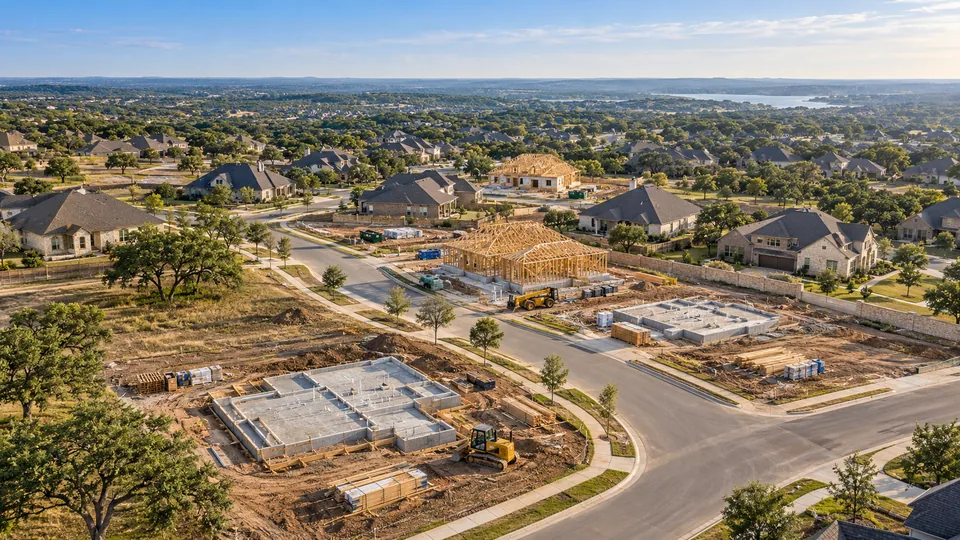
Chapter 19 and the 500-Year Floodplain
The City of Houston's floodplain ordinance, Chapter 19 of the Code of Ordinances, defines the Houston Special Flood Hazard Area to include both the 100-year and 500-year floodplains. A City of Houston notice published in 2025 describes the local rule as requiring elevation of sites within those boundaries to the 500-year floodplain plus two feet, and calls it more conservative than the federal standard it was compared against.
For a developer, the practical effect is that a site outside the 100-year floodplain may still be inside the city's regulated area. Finished floor heights, utility elevations and the amount of imported fill are set by the 500-year line, not the 100-year line. That changes the site budget and often the foundation design, and both changes flow into the values a builders risk policy should reflect.
It also changes the schedule. Elevation certificates, foundation elevation permits and drainage plan review sit in sequence before vertical work. When a carrier asks for a construction start date, the honest answer often depends on when the floodplain items clear.
How to set values that include elevation work is explained under builders risk values and flood terms.
Harris County Detention and Fill Offset
The Harris County Flood Control District says all new development in Harris County must comply with detention requirements. Each new development larger than one acre must perform a drainage study, signed and sealed by the design engineer, that supports a determination of no adverse impact. The District also requires that fill placed in a mapped floodplain be offset by an equal amount of new storage.
Those rules turn many Houston-area projects into two projects: an earthwork and drainage job that builds ponds, channels and outfalls, plus the vertical job that follows. The detention work is often the first thing on site, and it is exposed to Gulf Coast rainfall before the drainage system is finished. A storm that fills an unfinished pond, erodes its slopes or floods an adjacent pad is a builders risk question first and a liability question if water reaches a neighbor.
The design engineer's no-adverse-impact finding also matters later. If a downstream owner claims the project worsened flooding, the dispute may involve the developer, the engineer and the site contractor. Professional liability, the contractor's completed-operations coverage and the developer's own liability each answer a different part of that claim.
The full earthwork and drainage scope is walked through in site improvement and drainage project risks.
City Detention Rates After the May 2025 Supplement
Inside the city, design manual supplement IDMS-2025-01, effective May 2025, sets a flat rate of 0.8 acre-feet per acre of proposed impervious area for non-single-family tracts of 20 acres or less; larger tracts follow the Flood Control District manual at no less than 0.75. Redevelopment earns 0.4 acre-feet per acre of credit for impervious cover removed, and replatting cannot reduce detention.
Approved parking-lot ponding is capped at 9 inches over the inlet with flood warning signs, a premises liability question; underground storage built instead belongs in builders risk values.
Rules outside the city limits are covered in Harris County plat security and detention rules.
Structuring Builders Risk for a Houston Site
Flood and named windstorm are the two terms that usually define a Houston builders risk quote. Carriers often set separate sublimits and deductibles for each, and some may limit flood for sites in mapped floodplains. Because Chapter 19 maps a wider area as regulated, it is worth asking how the carrier defines a flood zone and whether the 500-year area is treated differently from the 100-year area.
Values matter as much as terms. The cost of imported fill, raised slabs, pier work and elevated equipment pads can be large, and if it is left out of the completed value, a loss can trigger a coinsurance or underinsurance dispute. Detention ponds and channels are another gray area: ask whether site work and below-grade improvements are included, excluded or sublimited on the form being offered.
Delay is the third piece. A storm during earthwork can push back every later trade. Whether soft costs, extra interest or lost rents are recoverable depends on whether a delay-in-completion option was bought and how its waiting period reads.
The broader owner program is laid out in developer insurance planning.
What Houston Site and Utility Contractors Carry
Civil contractors building detention, storm sewer and outfall work carry exposures that differ from the vertical trades. Excavation near existing utilities, dewatering, silt discharge and damage to neighboring property during a storm are all common sources of claims. A contractor's general liability may exclude or limit pollution, so silt-laden or contaminated discharge can fall into a gap unless contractors pollution liability is in place.
Owners and lenders often ask the site contractor for additional insured status on a completed-operations basis because drainage problems tend to show up after the first heavy rain season. Whether that request can be met depends on the endorsement forms available on the contractor's policy. Confirm the forms before contract signing rather than after the first certificate arrives.
Discharge and contaminated soil exposures are explained under pollution liability for site and drainage work.
Street Cuts, Steel Plates and Construction Stormwater
Houston's Street Cut Permit System lists fees effective January 1, 2026, and requires a Steel Plate Permit for temporary plating, a common liability claim source. Sites disturbing one acre or more need TCEQ coverage under general permit TXR150000, which runs to March 5, 2028. Large sites send the City their notice of intent at least two days before earthwork. Coverage runs to 70% vegetative density, so late silt discharge can fall to pollution liability.
The City's tiered street-work bond is explained in Texas right-of-way and street-work bonds.
Airport and Port Projects
Houston Airport System work runs under City of Houston contract terms and airport badging, and Port Houston sets its own procurement and bond rules.
Those requirements are set out in Houston Airport System contractor requirements.
How Houston Fits the Texas Picture
Texas statewide rules on public-work bonds, liens and stormwater permits apply in Houston as they do elsewhere in the state. What sets Houston apart is the floodplain layer on top: the city's 500-year standard and the county's detention and fill-offset rules. A program designed for a Dallas or Austin site may carry the wrong flood assumptions if it is copied onto a Houston project without review.
For multi-site sponsors, a review of each Houston project's floodplain status, detention design and builders risk terms side by side is usually the cleanest way to catch differences before a loss does.
Licensing, bond and lien rules are summarized under statewide Texas construction rules.
Before You Ask for a Quote
What to Gather
- FEMA flood map panel showing whether the site is in the 100-year or 500-year floodplain
- Chapter 19 elevation requirements and the engineer's finished floor elevations
- Harris County Flood Control District drainage study and detention design
- Construction budget with fill, foundation elevation and detention costs broken out
- Site contractor's liability, pollution and umbrella certificates
- Lender insurance exhibit with flood and windstorm requirements
What to Ask the Insurer or Surety
- How does the builders risk form treat a site in the 500-year floodplain versus the 100-year floodplain?
- Are detention ponds, channels and other site work included, excluded or sublimited?
- What flood and named windstorm sublimits and deductibles apply, and are they per occurrence?
- Is a delay-in-completion option available, and what is its waiting period?
- Does the site contractor carry pollution coverage for dewatering and silt discharge?
- Can the contractor provide completed-operations additional insured status to the owner and lender?
Quick Answer
Houston's Chapter 19 regulates the 500-year floodplain and requires elevation to the 500-year level plus two feet, and Harris County requires detention and fill offset for new development. Both raise site costs and flood questions that builders risk and liability must address.
Common Mistake
Assuming a site outside the 100-year floodplain avoids flood planning, then leaving elevation and detention costs out of builders risk values and learning the site is in the city's regulated area.
Broker Perspective
A broker checks three things early on a Houston project: whether the 500-year floodplain reaches the site, how the detention work is sequenced and how the carrier treats flood and named windstorm for that location.
Coverage Impact
Flood and windstorm terms often carry their own sublimits and deductibles, and site work may be limited on some builders risk forms. Third-party drainage claims after completion typically depend on completed-operations liability and its endorsements.
Questions Buyers Ask
Our Houston site is outside the 100-year floodplain. Do floodplain rules still apply?
They may. The City of Houston's Chapter 19 defines its special flood hazard area to include the 500-year floodplain, and a city notice describes the rule as requiring elevation to the 500-year level plus two feet. Check the FEMA panel for the 500-year line, then confirm with the city's floodplain office before setting the budget or the builders risk values.
Does the Harris County detention requirement apply inside the City of Houston?
The Harris County Flood Control District says all new development in Harris County must comply with detention requirements, and Houston sits largely within the county. The city also applies its own drainage criteria. Ask the design engineer which criteria govern your site and whether both city and District review apply before construction can start.
Will builders risk respond if a storm floods our unfinished detention pond?
It depends on the form. Some builders risk forms limit or exclude site work, land improvements and earth movement, and flood may carry its own sublimit and deductible. Ask whether detention basins and grading are included in covered property during construction, and how the flood deductible is calculated for a single storm.
Why does the fill-offset rule matter to a site contractor?
The District requires fill placed in a mapped floodplain to be offset by equal new storage, so the contractor often excavates and hauls more than the building pad alone would need. That adds equipment hours, dewatering and discharge exposure. Contractors should confirm their liability and pollution coverage before the excavation scope grows.
Official Sources
- City of Houston Final Notice, FFRMS Floodplain (2021 Winter Storm Program, February 2025), City of Houston Housing and Community Development Department. Chapter 19 of the Houston Code of Ordinances defines the Houston Special Flood Hazard Area to include the 100-year and 500-year floodplains and requires elevation of sites within its boundaries to the 500-year floodplain plus two feet. Verified 2026-10-23.
- Clear Creek FAQs (development, detention and fill requirements), Harris County Flood Control District. All new development in Harris County must comply with detention requirements; developments over one acre need a sealed drainage study supporting no adverse impact; fill in a mapped floodplain must be offset by equal new storage. Verified 2026-10-23.
- Infrastructure Design Manual Chapter 9 Supplement IDMS-2025-01 (City Engineer letter dated May 15, 2025), City of Houston, Houston Public Works. Supplement effective immediately; Table 9.5 flat 0.8 ac-ft/ac for tracts of 20 acres or less and HCFCD PCPM with a 0.75 minimum above 20 acres; subsurface drainage required; 0.4 ac-ft/ac redevelopment credit with a sealed survey within five years; replatting cannot reduce detention; parking-lot ponding capped at 9 inches with signage. Verified 2026-10-27.
- Street Cut Permit Fee Schedule, City of Houston, Houston Public Works. Street cut permit fees effective January 1, 2026; Steel Plate Permit required when steel plate is used as a temporary surface. Verified 2026-10-27.
- TCEQ Inspection (HPWOCE1031), construction stormwater, City of Houston, Houston Permitting Center. TCEQ coverage for sites disturbing one acre or more under Chapter 47, Article XII, Division 3; large sites send the City a copy of the NOI at least two days before earthwork; coverage until final stabilization at 70% vegetative density. Verified 2026-10-27.
- Stormwater Permits for Construction (2023 CGP TXR150000), Texas Commission on Environmental Quality. Construction general permit TXR150000 effective March 5, 2023, and expiring March 5, 2028; small sites disturb 1 to under 5 acres and large sites 5 acres or more. Verified 2026-10-27.
Reviewed by the Principal, Gleason Insurance Brokers, LLCUpdated

