The Trinity River Corridor Development Certificate
The North Central Texas Council of Governments administers a regional permit called the Corridor Development Certificate. NCTCOG says a CDC is required when a project sits within the FEMA 100-year floodplain of the Trinity River Corridor, which the program calls the Regulatory Zone. A project completely outside that zone does not need one. The participating local governments listed by NCTCOG are Arlington, Carrollton, Coppell, Dallas, Dallas County, Farmers Branch, Fort Worth, Grand Prairie, Irving, Lewisville and Tarrant County.
The common criteria are strict. NCTCOG lists no increase in the 100-year flood elevation and no significant increase in the Standard Project Flood elevation, along with a maximum valley storage loss of 0.0 percent for the 100-year flood and 5.0 percent for the Standard Project Flood. In practice a developer who fills part of a site usually has to cut storage somewhere else, so the earthwork, haul and grading scope can grow before vertical work begins.
For the insurance plan, the CDC matters in two ways. The permit sits on the critical path, so the construction start date in a builders risk quote may move. And a site that needs a CDC is, by definition, in a mapped floodplain, which usually changes how underwriters approach flood limits, deductibles and the timing of when flood terms attach.
Flood terms, values and delay options are explained under builders risk for floodplain sites.
Fort Worth Community Facilities Agreements and the Financial Security
When a developer builds public infrastructure in Fort Worth, the city uses a community facilities agreement. The city's administrative guidelines describe a CFA as the agreement a developer signs to secure construction of community facilities such as streets, sidewalks, street lights, traffic signals, storm drainage, water and sanitary sewer. The process moves through engineering review, a financial security submittal, execution of the CFA and then construction.
The guarantee is the part a surety cares about. The guidelines describe a financial security stage before the CFA is executed, and they note that plats are held if the security is a completion agreement rather than another form. Where the developer bids privately under Local Government Code chapter 212 with city participation, the guidelines call for a development bond for the entire CFA contract amount. At close-out, the city mails a release letter to the surety company or financial institution.
A surety that writes a development bond is underwriting the developer and its principals, not insuring the project. The surety will usually ask for a general indemnity agreement, sponsor financials and a view of the contractor building the work. Treat the bond request as part of the capital plan: the form of security affects plat timing, which affects when lots or pads can be sold or financed.
How sureties look at the developer behind a public-improvement security is explained in subdivision improvement bond underwriting.
Acceptance, the Two-Year Maintenance Bond and Completed Work
Fort Worth's guidelines say that once community facilities are built, inspected and verified, the city accepts ownership and maintenance, and the facilities are then subject to a two-year maintenance bond. That means the surety relationship on a Fort Worth CFA often runs well past the date the developer considers the project done, and the contractor or developer stays on the hook for defects the city finds in that period.
The insurance question sits next to the bond. A maintenance bond protects the city as obligee, and the principal owes the surety indemnity for anything the surety pays. It is not a liability policy for the principal. If a failed storm line damages an adjacent property after acceptance, the claim against the contractor typically turns to its completed-operations liability, and whether that responds depends on the policy form, any subcontractor conditions and whether the policy is still in force.
Civil contractors who build CFA work for several developers can end up with overlapping maintenance periods and overlapping completed-operations exposure. A broker review should line up the bond schedule against the liability program so a renewal or a carrier change does not quietly shorten protection for work still under a city maintenance bond.
The liability side of post-acceptance claims is explained in completed operations after city acceptance.
Fort Worth's Street and Storm Drain Contractors Bond
Before a contractor builds in Fort Worth's right-of-way, the Street Permit Center expects it to be licensed and bonded. The city's package lists an original $25,000 Street and Storm Drain Contractors Bond with power of attorney, a license application for new contractors and a $500 annual license fee. For commercial work it adds a certificate of liability insurance for $10 million of general liability, naming the city as certificate holder and additional insured, with a 30-day cancellation notice.
The bond form, written under city Ordinance No. 3449, reaches further than a typical license bond. The principal agrees to indemnify the city and any person or firm it has contracted with for damages caused by negligence in the work, and to keep the work in repair for two years after the city completes and accepts it. Successive claims are allowed, but the surety's total liability is capped at $25,000. The surety can end the bond on five days' written notice to the City Council, yet its maintenance obligation for work already performed continues for the two-year period.
For a site or utility contractor, that means one small annual bond can carry a long tail across many permits, and the surety will typically ask about street work still inside its two-year window before renewing. The $10 million liability figure is often reached with a primary policy plus an umbrella or excess layer, so the certificate should show both, and the additional insured wording should match what the city asks for.
Statewide TxDOT and city permit bond rules are compared in Texas right-of-way permit bonds.
Fort Worth's Insurance Terms for Utility Contractors in the Street
The same Street Permit Center package includes a sheet of basic insurance requirements for utility contractors. It lists general liability of $10,000,000 each occurrence, "no exception," and says a primary policy combined with a follow-form excess or umbrella policy is acceptable. It also lists auto liability of $1,000,000 each accident on "Any Auto," statutory workers' compensation and employer's liability. The sheet says exceptions may be permitted depending on the risk, with workers' compensation the only non-negotiable item.
- Employer's liability: $100,000 each accident, $100,000 disease each employee and $500,000 disease policy limit.
- Endorsements: the city, its officers and employees as additional insured, 30 days' notice of cancellation or nonrenewal and a waiver of subrogation in favor of the city.
- Insurers licensed or approved in Texas with an A.M. Best rating of at least A: VII, or equivalent strength acceptable to the city's Risk Manager.
- Deductibles or self-insured retentions acceptable to the Risk Manager, and pools or risk retention groups only with approval.
Building a $10 million tower for one city's permits is discussed in project excess liability for high city limits.
Dallas Private Development Contracts and the Development Bond
Dallas handles developer-built water and wastewater mains through a private development contract between the owner and its contractor, entered under Section 49-60(f) of the Dallas City Code. The city's standard form says the contractor furnishes performance and payment bonds for the benefit of the owner and the city, from a corporate surety authorized in Texas that names a resident agent in Dallas County. The performance bond also backs repair of defects in materials or workmanship that appear within one year after the city's final acceptance. The posted form still refers to the 2004 fourth edition of the regional specifications, so confirm the current version with Dallas Water Utilities.
The owner and contractor also agree to defend and indemnify the city against claims that include personal injury or property damage arising from the work. The city's checklist asks the contractor for a certificate of insurance naming the City of Dallas as additional insured, with a waiver of subrogation on each liability policy, endorsement CG 2503 and the project name on the certificate.
The developer carries its own security: a development bond, an unconditional letter of credit or a cash deposit, unless the contractor submits a waiver letter. The development bond form backs the developer's promise to pay its contractor, adds 10 percent of the penal sum for court costs and attorneys' fees, rises automatically with any change order that increases the contract price and does not fall when the price drops. The surety also waives notice of changes and extensions. That is a payment obligation of the sponsor, so the surety typically underwrites the developer's liquidity, and the contractual indemnity in the contract is a question for the contractor's liability policy, subject to its terms.
How Texas cities and counties use plat and improvement security is explained in Texas subdivision improvement bonds.
Suburban Cities and Counties Around DFW
Growth north of Dallas runs through cities and counties with their own plat security and maintenance bond rules, and those rules differ from Dallas and Fort Worth. Frisco, Prosper, Celina, Collin County and Denton County each have a separate page on this site, so a sponsor building in more than one jurisdiction can compare security percentages, maintenance periods and right-of-way terms side by side.
Unincorporated Collin County rules are set out in Collin County plat bonds and road acceptance.
Who Carries What on a DFW Development
On a typical North Texas subdivision or industrial site, the developer owns the land risk, the lender relationship and the CFA security, while the site contractor carries the earthwork, utility and paving exposures. A CDC site adds a hydraulic analysis, cut-and-fill work and a permit sequence that both parties depend on. The contract should say who bears the cost if the permit slips, who buys builders risk and whose policy responds to water damage during the excavation phase.
On large DFW work, contractor qualification often comes from the owner, the lender and the surety as much as from any license. That puts more weight onto the insurance certificates, the bond capacity and the contract language. Developers who rely only on a contractor's annual certificate may find its limits shared across many jobs and its additional insured endorsement limited to ongoing work.
For larger programs with several contractors on one site, a project-specific placement or a wrap-up can bring the liability and builders risk under one plan. Whether that makes sense depends on the construction value, the number of trades and how the lender wants to see the program documented.
Statewide licensing, public-work bond and lien rules are summarized under Texas project insurance and surety rules.
Bidding the City's Own Construction Contracts
Contractors bidding the city's own capital projects meet a separate set of requirements from development permits: bid security, payment and performance bonds, insurance minimums and endorsements, retainage, warranty and small business program rules, set in the city's contract documents and each solicitation.
Those terms are set out in City of Dallas construction contract bonds and insurance.
DFW Airport Projects
DFW Airport runs a rolling owner-controlled program and its own airfield auto requirements for contractors.
Those requirements are set out in DFW Airport contractor requirements.
Data Center Ordinance in Mesquite
Mesquite adopted a data center ordinance in July 2026 with setbacks, Tier 4 Final generators and a noise study after occupancy.
Those requirements are set out in Mesquite data center ordinance.
Project Types Where These Rules Bite
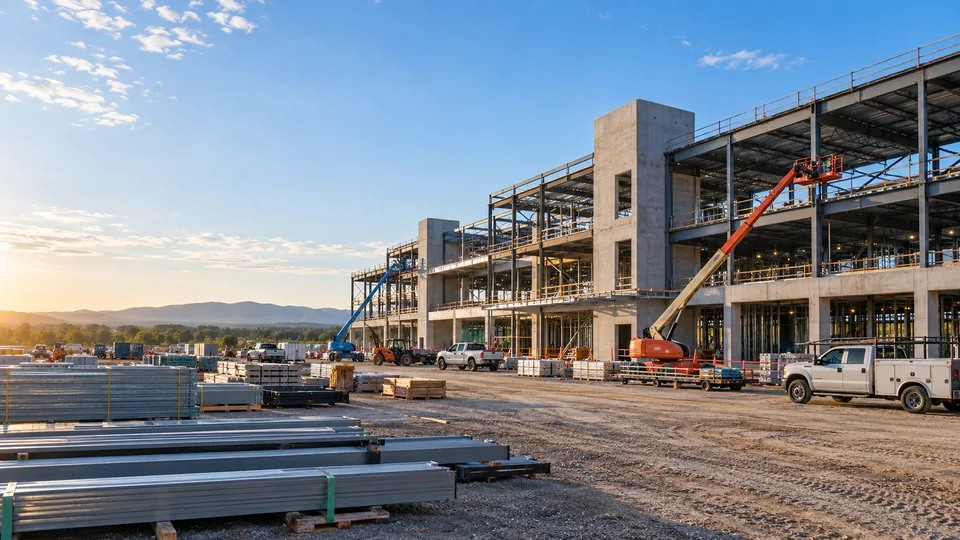
Industrial and distribution sites along the Trinity corridor and its tributaries are common candidates for a CDC review, because large flat pads near the river often fall in or next to the Regulatory Zone. Those projects tend to carry high builders risk values for structure and equipment, so the flood terms and any delay-in-completion option deserve attention early.
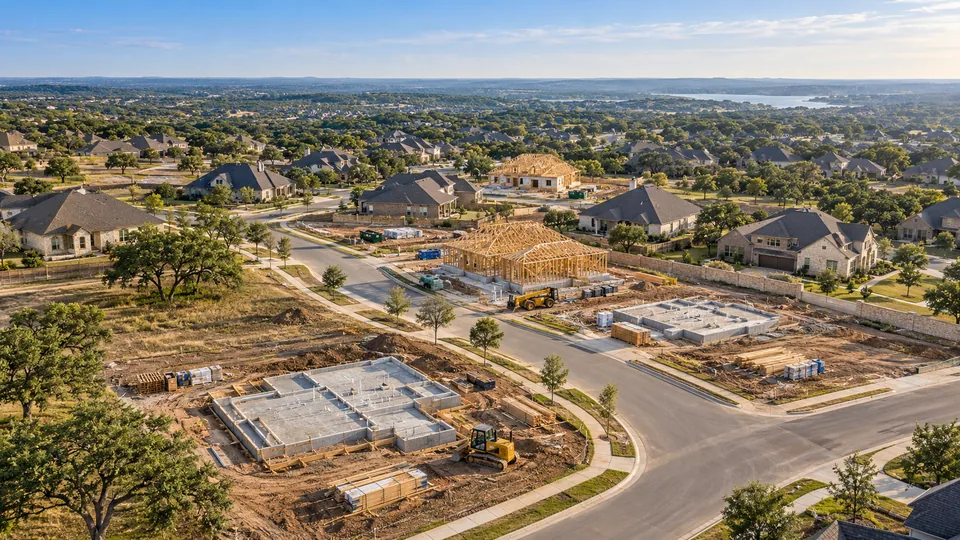
Residential subdivisions in Fort Worth more often meet the CFA process first, because streets, water and sewer are built by the developer and handed to the city. The security form, the contractor's bond capacity and the plat timing usually drive the schedule. For mixed-use and commercial projects, both rules can apply on the same site.
Values, commissioning and equipment exposures are explained in industrial and distribution project insurance.
Before You Ask for a Quote
What to Gather
- FEMA floodplain map for the site and whether it falls in the Trinity River Regulatory Zone
- CDC application status and the engineer's hydraulic analysis
- Draft community facilities agreement and the chosen form of financial security
- Construction budget split into hard costs, soft costs and public infrastructure
- Site contractor's current liability, umbrella and bond capacity letters
- Lender insurance exhibit and the owner-contractor agreement
- Fort Worth Street and Storm Drain Contractors Bond and liability certificate, or the Dallas private development contract bonds
What to Ask the Insurer or Surety
- How do flood terms apply to a site that sits partly in the 100-year floodplain during earthwork?
- Can the builders risk start date be set to follow CDC approval without a gap?
- Will the surety accept a development bond for the full CFA amount, and what indemnity will it require?
- Does the contractor's completed-operations coverage reach work under a two-year city maintenance bond?
- Is a delay-in-completion or soft-cost option available if a permit slips?
- Would a project-specific liability placement fit better than relying on each contractor's annual policy?
- Does the umbrella follow form so the primary and excess layers together reach the $10 million Fort Worth figure?
Quick Answer
On Dallas-Fort Worth projects, a Trinity River floodplain site may need an NCTCOG Corridor Development Certificate, and Fort Worth public infrastructure needs a CFA financial security and a two-year maintenance bond. Both shape builders risk timing and the surety request.
Common Mistake
Quoting builders risk with a start date and flood terms before the CDC is approved, then finding the policy period or flood conditions no longer match the real schedule.
Broker Perspective
A broker lines up three calendars on DFW sites: the CDC approval, the CFA security and plat release and the end of the city maintenance bond. Gaps usually appear where those dates do not match the policy terms.
Coverage Impact
Flood exposure on a CDC site may carry its own sublimit or deductible, depending on the builders risk form. A CFA development or maintenance bond protects the city, and the principal typically owes the surety indemnity for any loss it pays.
Questions Buyers Ask
Does every Dallas-Fort Worth project need a Trinity River Corridor Development Certificate?
No. NCTCOG says a CDC is needed when a project is in the FEMA 100-year floodplain of the Trinity River Corridor within a participating city or county. A project fully outside that Regulatory Zone does not need one. Many suburban sites do not touch the program, while riverside industrial and mixed-use sites in Dallas, Fort Worth, Irving and Grand Prairie often do.
Can a contractor's payment and performance bonds stand in for the Fort Worth CFA security?
It depends on the agreement. Fort Worth's guidelines describe several security options and, where city participation is privately bid under chapter 212, call for a development bond for the entire CFA amount. Ask the city's development coordination staff which forms fit your CFA and have counsel confirm the bond wording before it goes to a surety.
Why would a Corridor Development Certificate affect my builders risk policy?
The certificate controls when site work can start and confirms the site is in a mapped floodplain. Builders risk carriers often price flood separately and may set a sublimit or deductible for it. If the permit slips, the policy period may need to move, and a delay or soft-cost option may matter if the project opens late.
Who is the surety protecting on a Fort Worth maintenance bond?
The city. A maintenance bond backs the principal's promise to fix defects in accepted community facilities during the two-year maintenance period. If the surety pays, it usually looks to the principal and any indemnitors to repay it. The bond does not protect the contractor against its own liability claims, which is a job for its liability program.
We build in both Dallas and Fort Worth. Should the insurance plan differ by city?
Often, yes. Both cities take part in the Trinity CDC program, so a floodplain site in either may need the certificate. Fort Worth's community facilities agreement process brings its own security and maintenance bond steps for developer-built public infrastructure. Review each city's agreement and permit path against the program instead of copying one project's plan to the next.
What does Fort Worth ask for before a contractor can work in the street?
The Street Permit Center package lists an original $25,000 Street and Storm Drain Contractors Bond, a $500 annual license fee and, for commercial work, a $10 million general liability certificate naming the city as additional insured. The bond also carries a two-year maintenance duty after acceptance. Confirm current requirements with the Street Permit Center before applying.
Official Sources
- Corridor Development Certificate Program, North Central Texas Council of Governments. CDC required in the FEMA 100-year floodplain of the Trinity River Corridor (Regulatory Zone); no rise in 100-year flood elevation; valley storage loss limits of 0.0% (100-year) and 5.0% (Standard Project Flood); list of participating cities and counties. Verified 2026-10-23.
- Administrative Guidelines for the Community Facilities Agreements Ordinance (June 2019), City of Fort Worth Development Services. CFA scope of public infrastructure; financial security stage before CFA execution; plats held when the security is a completion agreement; development bond for the entire CFA amount on chapter 212 private bids; two-year maintenance bond after acceptance; release letter mailed to the surety at close-out. Verified 2026-10-23.
- Street and Storm Drain Contractors Bond, License Application and Utility Contractor Insurance Requirements, City of Fort Worth Transportation and Public Works, Street Permit Center. $25,000 Street and Storm Drain Contractors Bond; $500 annual license fee; $10 million general liability certificate for commercial work with city as additional insured and 30-day cancellation notice; Ordinance No. 3449 bond conditions incl. two-year maintenance after acceptance, $25,000 aggregate cap and five days' notice to terminate; utility contractor insurance: $10,000,000 CGL with follow-form excess allowed, $1,000,000 Any Auto, statutory WC, EL 100/100/500, A: VII rating, waiver of subrogation. Verified 2026-10-27.
- Private Development Contract (Water and Wastewater), Form 11.14, City of Dallas Water Utilities. Contract under Dallas City Code 49-60(f); performance and payment bonds for owner and city from a Texas-authorized corporate surety with a Dallas County resident agent; one-year defect repair after final acceptance; owner and contractor defend and indemnify the city; references the 2004 fourth edition regional specifications. Verified 2026-10-27.
- Private Development Contract for Water and Wastewater Checklist, Form 11.9, City of Dallas Water Utilities. Contractor performance and payment bonds; developer development bond, unconditional letter of credit or cash deposit, or contractor waiver letter; certificate of insurance with City of Dallas as additional insured, waiver of subrogation and CG 2503; project name on the certificate. Verified 2026-10-27.
- Development Bond, Form 11.16, City of Dallas Water Utilities. Bond backs the developer's payment to its construction contractor; adds 10 percent of the penal sum for court costs and attorneys' fees; increases automatically with price-increasing change orders and does not decrease; surety waives notice of changes; given under Local Government Code 212.901. Verified 2026-10-27.
Reviewed by the Principal, Gleason Insurance Brokers, LLCUpdated