
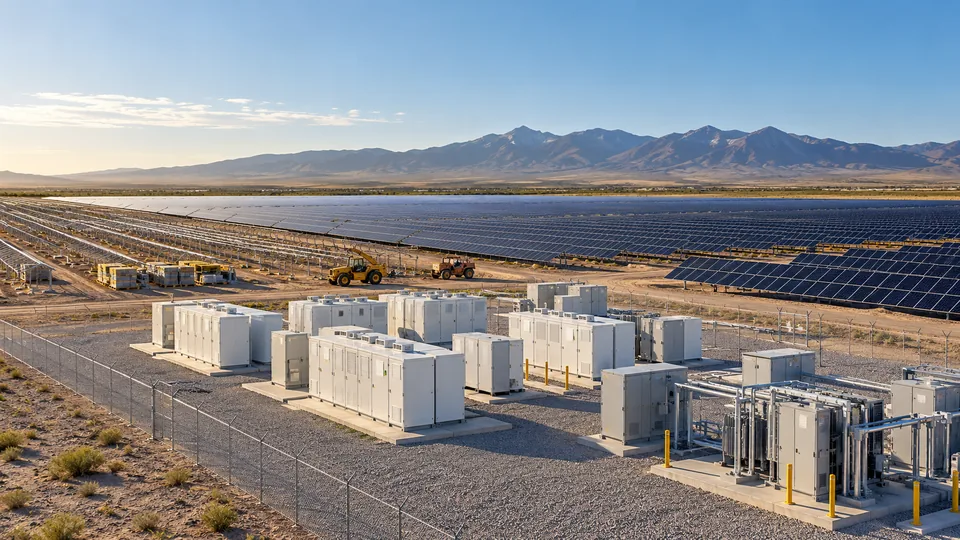
What Changes on Solar and Storage Projects
A solar or battery storage project is built once and then operates for decades, and the obligations that come with it follow that life. Before construction, a developer often has to post security that the equipment will be removed and the land restored at the end of the project. During construction, counties may require road-use agreements backed by bonds or letters of credit for heavy haul traffic. Battery storage adds fire-safety standards, emergency response planning and inspections that affect how a site is designed, built and insured.
For the contractors who build these projects, the owner's obligations shape the contract: performance and payment bonds, builders risk values that include long-lead equipment such as modules, inverters, transformers and battery enclosures, liability and pollution coverage for sitework on large disturbed areas, and indemnity terms that pass the owner's liabilities down the chain.
How this fits a developer's wider program is explained under developer insurance and bonds.
Texas: Lease Security and Battery Fire Safety
Texas places decommissioning security in the lease between the facility owner and the landowner. House Bill 3228, effective September 1, 2025, amended the solar and wind chapters of the Utilities Code to require a bond, letter of credit or parent guaranty sized to removal, recycling and restoration costs net of salvage, set by a Texas professional engineer and updated over the life of the project. House Bill 3809 added a chapter for battery storage leases, and House Bill 3824 added fire-safety requirements for battery storage facilities that begin operating on or after January 1, 2027. Some counties also require road-use security for construction traffic.
The Texas rules are set out in Texas solar and storage requirements.
California: Opt-In Certification, Battery Plans and County Security
California projects are approved by counties or, for eligible facilities that opt in, by the California Energy Commission, whose certification path comes with prevailing wage, skilled and trained workforce and community benefits agreement conditions. Battery storage owners must keep emergency response plans under state law, and the Public Utilities Commission's General Order 167-C, adopted March 13, 2025, extended its oversight to third-party battery owners. Desert counties such as Kern, Riverside, San Bernardino and Imperial use decommissioning, closure or reclamation security and road-repair terms, often in each project's conditions of approval.
The California rules and county examples are set out in California solar and storage requirements.
Federal Public Lands in Nevada, Arizona and California
Much of the solar development in Nevada, Arizona and the California desert sits on land managed by the Bureau of Land Management. Its right-of-way rules require a bond for solar projects of at least $10,000 per disturbed acre, with the actual amount based on a reclamation cost estimate that covers hazardous materials, decommissioning and reclamation, delivered before the Notice to Proceed. Right-of-way holders also face strict liability to the United States up to a per-incident cap that is adjusted for inflation, plus indemnity obligations.
The federal rules are set out in BLM solar right-of-way bonds and liability.
Nevada and Arizona State Rules
In Nevada, renewable generating plants above 70 megawatts need a permit from the Public Utilities Commission under the Utility Environmental Protection Act, and the permit process calls for a decommissioning plan and a plan for funding it. Assembly Bill 493, effective October 1, 2025, added a decommissioning cost estimate for larger solar facilities, including battery storage on the same site. In Arizona, we did not verify an enacted statewide decommissioning security requirement, so projects on private land look to county zoning and the project's own approvals, and projects on federal land follow the Bureau of Land Management rules.
- Nevada: utility commission permits, decommissioning plans and cost estimates
- Arizona: county approvals and federal land rules
The Nevada rules are set out in Nevada solar and storage requirements.
How Sureties View Decommissioning Bonds
A decommissioning or reclamation bond guarantees an obligation that may not come due for decades, and the amount can be recalculated during that time. That is different from a construction performance bond, which ends when the work is accepted and the warranty period runs out. Sureties typically look at the strength of the obligor and any parent company, the engineering estimate behind the amount, salvage assumptions, how often the amount resets and whether the bond can be canceled or replaced. Collateral, indemnity from a parent and the choice between a bond and a letter of credit are common points in the discussion.
Because the holder may be a landowner, a county or a federal agency, the bond form also differs. Reading the lease, ordinance, condition of approval or regulation that requires the security, and confirming who must approve the form, comes before any surety submission.
How surety underwriting works is explained under construction surety bonds.
Builders Risk, Liability and Pollution During Construction
Construction-phase insurance on solar and storage projects centers on high-value equipment that arrives in stages and is stored on large open sites, so builders risk values, transit and off-site storage, theft and weather exposures and delay in start-up deserve attention. Sitework on hundreds of acres raises erosion, stormwater and dust questions. Battery systems add fire and hazardous materials concerns that a contractors pollution policy and the general liability program may treat differently.
Owners commonly pass their indemnity and insurance requirements to the EPC contractor and on to civil and electrical subcontractors, so each tier reads the prime contract's insurance exhibit and indemnity terms before pricing its work.
Builders risk for large industrial projects is explained under builders risk for industrial and energy projects.
Before You Ask for a Quote
What to Gather
- The lease, permit conditions or regulation requiring security
- The engineer's decommissioning or reclamation cost estimate
- Any road-use agreement and its security terms
- Battery storage design standards and emergency plans
- The EPC contract's bond, insurance and indemnity exhibits
- Financial statements for the project company and any parent
What to Ask the Insurer or Surety
- Who holds the security, and must they approve the form?
- How often is the amount recalculated?
- Can a letter of credit or parent guaranty replace a bond?
- Do builders risk values include equipment in transit and storage?
- Which battery safety rules apply on this project's operating date?
Quick Answer
Utility-scale solar and storage projects typically require decommissioning or reclamation security, road-use security and battery safety compliance, set by the lease, county, state or federal land manager; amounts, forms and timing vary by jurisdiction and project.
Common Mistake
Treating a decommissioning bond like a performance bond. It can run for decades and be recalculated, which changes how a surety underwrites it.
Broker Perspective
We start with the document that requires the security, then line up the surety, the construction-phase insurance and the contract terms around it.
Coverage Impact
Leases, permits and regulations set the security and minimums; the bonds and policies issued, their endorsements and the surety's underwriting decide what responds.
Questions Buyers Ask
Who holds decommissioning security in Texas?
Under the 2025 amendments, the security runs to the landowner under the lease, not to a permitting agency. The lease sets the form, within what the statute allows.
How much is a BLM solar right-of-way bond?
At least $10,000 per disturbed acre, with the actual amount based on a reclamation cost estimate. It is delivered before the Notice to Proceed.
Do battery storage projects have separate safety rules?
Often. Texas added fire-safety requirements for facilities operating on or after January 1, 2027. California requires emergency response plans with utility commission oversight.
Can a letter of credit replace a decommissioning bond?
Often, where the lease, ordinance or regulation allows it. Texas leases can use a bond, letter of credit or parent guaranty, and county conditions list their own accepted forms.
Is there an Arizona statewide decommissioning bond rule?
We did not verify an enacted statewide requirement. Projects look to county approvals on private land and to Bureau of Land Management rules on federal land.
Official Sources
- House Bill 3228, enrolled (2025), Texas Legislature. Decommissioning security in Texas solar and wind leases: forms, amount and engineer updates. Verified 2026-10-26.
- House Bill 3824, enrolled (2025), Texas Legislature. Fire-safety requirements for Texas battery energy storage facilities. Verified 2026-10-26.
- 43 CFR 2805.20, bonding requirements, U.S. Government Publishing Office. BLM right-of-way bonds, including the solar minimum per disturbed acre and the reclamation cost estimate. Verified 2026-10-26.
- CEC opt-in certification program, California Energy Commission. Opt-in certification for clean energy facilities and its labor and community benefit conditions. Verified 2026-10-26.
- CPUC General Order 167-C, California Public Utilities Commission. Battery storage emergency plan oversight, including third-party owners. Verified 2026-10-26.
- NRS Chapter 704, Nevada Legislature. Utility Environmental Protection Act permits for larger generating plants and decommissioning plans. Verified 2026-10-26.
Reviewed by the Principal, Gleason Insurance Brokers, LLCUpdated

