
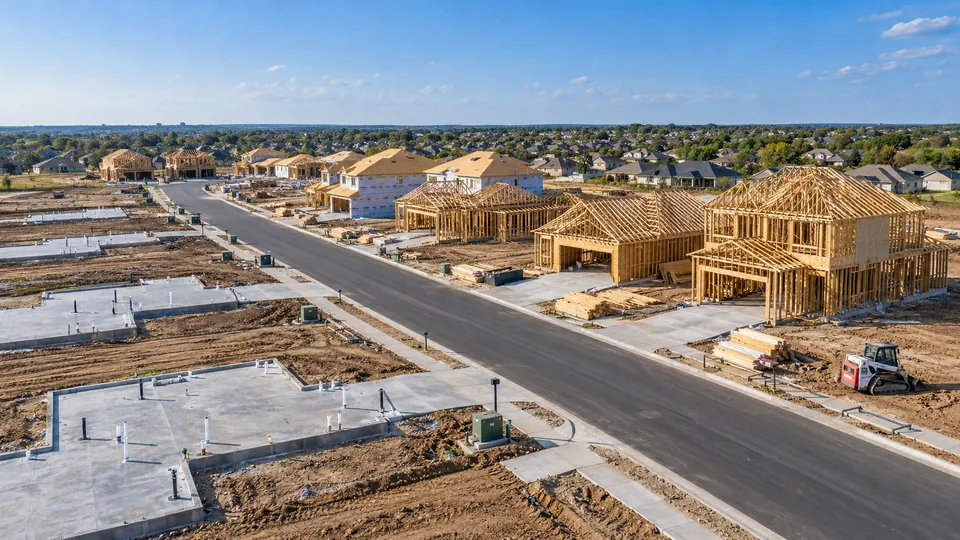
Why Tract and For-Sale Work Is Hard to Place
A commercial building usually has one owner who can bring a defect claim. A tract of 300 homes has 300 potential claimants, plus an association if there are common areas, plus later purchasers of each home. Production building also repeats the same plan, details, materials and trades across every lot, so a single failure mode, such as a window flashing sequence or a slab vapor barrier, can surface as a claim on dozens of homes at once.
Underwriters price that pattern rather than any one house. They ask about the product type, unit count, phasing, the share of for-sale and for-rent units, third-party inspections and quality control, the soils and grading reports and the builder's prior claims. Many carriers limit residential exposure by endorsement, excluding condominiums, townhomes, tract work or work above a stated unit count, and some write residential builders only with a self-insured retention the named insured must satisfy itself.
The result is fewer markets, more conditions and terms that vary widely from carrier to carrier, which is why a project-specific placement for a tract or condominium is usually compared on the actual forms rather than on headline limits.
For how a policy dedicated to one project is structured, see project-specific liability insurance.
California: SB 800 Standards and Builder Duties
California's Title 7 of the Civil Code, commonly called SB 800, sets functional standards for new residential construction intended to be sold as an individual dwelling unit and limits claims to violations of those standards, with exceptions in the title. Civil Code §896 lists the standards by system, including water intrusion through doors, windows, roofs, decks, stucco and foundations, plumbing and sewer leaks and soil and structural issues. Section 938 applies the title to new units where the purchase agreement was signed on or after January 1, 2003.
The title assigns its duties to the builder. Civil Code §911 defines the builder as the entity in the business of selling residential units to the public for the property, and treats a general contractor that is not a partner, member, subsidiary or similar affiliate of the builder like a subcontractor. Section 912 requires the builder to produce plans, soils reports and maintenance documents within 30 days of a written request, keep an agent for notice and record a notice of the procedures on title. A builder that misses those duties can lose the protection of the prelitigation chapter.
Section 941 generally bars actions under the title more than 10 years after substantial completion, and it counts indemnity actions against trades within that period. A policy program for a California tract has to be read against that horizon, not just the build schedule.
For other California rules that shape a residential developer's program, see California developer insurance requirements.
Where SB 800 Meets the Liability Policy
The prelitigation process runs on short clocks. Under Civil Code §916, a builder that elects to inspect must complete the initial inspection and testing within 14 days after acknowledging the claim, and must provide written proof that it has liability insurance for damage or injury during inspection and testing. The builder must also give notice to any subcontractor, design professional, product manufacturer or supplier it intends to hold responsible early enough for them to attend the inspection.
Section 917 then gives the builder 30 days after the inspection to make a written repair offer, which must name the contractors who will perform the repair, and those contractors must be fully insured for damage they cause during the repair. A repair offer is a financial commitment. Many liability policies condition coverage on the insurer's consent before the insured makes voluntary payments or assumes obligations, so the builder should bring the insurer in before the offer goes out.
Downstream, Civil Code §2782(d) limits what a builder can shift to a subcontractor for defect claims on residential contracts entered after January 1, 2009, and §2782(e) says a subcontractor owes no defense until it receives a written tender with the claimant's information; a subcontractor that elects to defend with counsel of its choice must give written notice of that election no later than 90 days after receiving the tender.
For how long the completed operations hazard must last on residential work, see completed operations protection after closing.
Texas: The Residential Construction Liability Act
Texas Property Code chapter 27 governs most actions for residential construction defects. Its definition of residence covers detached one- and two-family dwellings, townhouses up to three stories with separate egress, duplexes through quadruplexes and condominium or cooperative units with their common elements. Section 27.002 excludes claims for personal injury, survival, wrongful death and damage to goods.
Before the 60th day preceding suit, the claimant must give the contractor written notice by certified mail describing the defects and provide its evidence. The contractor may request up to three inspections in the 35 days after it receives the notice and may make a written settlement offer within 60 days after receiving it. If the claimant rejects a reasonable offer, §27.004(e) limits recovery to the fair market value of the offer plus fees incurred before rejection. Section 27.007 requires most contracts subject to the chapter to carry a printed notice about the act, with a $500 civil penalty if it is missing.
Two provisions matter for insurance. The act's definition of contractor includes a registered risk retention group that insures a contractor's liability for residential defect repairs, and §27.004(p) preserves the contractor's contribution rights against a subcontractor it notified of the claim. Texas' anti-indemnity rules in Insurance Code chapter 151 also do not affect indemnity provisions for a single-family house, townhouse, duplex or related land development under §151.105(10).
For other Texas rules that shape a developer's program, see Texas developer insurance requirements.
Arizona: Purchaser Dwelling Actions
Arizona's purchaser dwelling action statutes, A.R.S. §12-1361 and following, apply to construction defect actions a purchaser brings against the seller of a dwelling, which includes single and multifamily units and association common areas. The seller is defined to include construction professionals, from developers and builders to subcontractors and suppliers. Section 12-1366 excludes personal injury and death claims and damage to property other than the dwelling.
Before suing, the purchaser must send written notice by certified mail, and the seller must promptly forward a copy to each construction professional it reasonably believes is responsible. The purchaser must make the dwelling available for inspection within 10 days of a request, and the seller must send a good faith written response within 60 days, which may include a notice of intent to repair or replace or an offer of money. During the notice and repair process, and for 30 days after repairs are substantially complete, limitations and repose periods, including A.R.S. §12-552, are tolled for the defects in the notice.
The insurance link is written into the statute. Under §12-1362(C), when the seller or a construction professional presents the notice to an insurer that issued it a policy covering defect liability, the insurer must treat it as a notice of claim subject to the policy terms and work cooperatively within the statutory time frames. Section 12-1363(G) also tolls the seller's indemnity and contribution claims against construction professionals until nine months after the purchaser serves its complaint.
For other Arizona rules that affect developers and homebuilders, see Arizona developer insurance and bonds.
Building a Placeable Program for a Tract
Because the market narrows for residential work, the builder's choices usually come down to three structures: the builder's annual program with a per-project aggregate and residential-eligible trades, a project-specific policy for the builder and possibly its GC, or a residential wrap that enrolls the trades. Each depends on the subcontract program working, because claims that fall outside the builder's policy still test each trade's coverage and indemnity.
Before going to market, collect what underwriters ask for and what the statutes require: the plans and soils reports the builder will have to produce, the maintenance and warranty documents given at sale, the statutory notices in the sales contract, a log of every trade by phase with its insurance and endorsements, and a claims procedure that routes homeowner notices to the insurer the day they arrive. A submission that shows those controls tends to reach more carriers and produce terms that are easier to compare.
For when enrolling the trades in one residential program makes sense, see residential wrap-ups for for-sale projects.
Before You Ask for a Quote
What to Gather
- Product type, unit count and phasing plan for each community, with for-sale and for-rent units separated
- Grading plans, final soils reports and structural calculations by phase
- Sales contract templates showing SB 800, RCLA or Arizona dwelling action notices
- Homeowner warranty and maintenance documents given at closing
- Trade list by phase with each trade's GL form, residential exclusions and completed operations endorsements
- Prior defect notices, claims and repair history, with insurer involvement noted
What to Ask the Insurer or Surety
- Does the policy exclude condominiums, townhomes, tract work or work above a stated unit count?
- Is there a self-insured retention, and must the named insured satisfy it itself?
- How does the policy treat a statutory prelitigation notice before suit is filed?
- Will the insurer participate in builder inspections and consent to repair offers within the statutory deadlines?
- What subcontractor conditions does the policy impose, and what happens if one is missed?
- How long does completed operations protection run, and does it match each state's defect period?
Quick Answer
Tract and for-sale residential liability is hard to place because repeated details, many claimants and long defect periods concentrate risk; SB 800, the Texas RCLA and Arizona's dwelling action statutes add notice and repair deadlines the insurer must fit.
Common Mistake
Making a statutory repair offer to a homeowner before the insurer has agreed to it, which can put coverage for the repair cost at risk under the policy's voluntary payment terms.
Broker Perspective
On tract work, a broker reads the residential and subcontractor conditions first, because those endorsements decide whether the limits are usable.
Coverage Impact
A residential-eligible policy with matched trade coverage may respond to defect-related property damage, but residential exclusions, retention terms and missed subcontractor conditions can narrow it sharply.
Questions Buyers Ask
Why do so many liability policies exclude tract homes and condos?
Repetition and claimant count. One installation detail can recur across a whole phase, and every buyer and association can bring a claim for years after closing. Some carriers decline that pattern entirely, others accept it only with unit limits, retentions or tighter subcontractor conditions. The exclusion is often on an endorsement, so read the forms, not just the declarations.
Does SB 800 apply to a GC building homes for a separate developer?
The duties in Civil Code Title 7 fall on the builder, defined in §911 as the party in the business of selling the units to the public. A GC that is not a partner, member, subsidiary or similar affiliate of that builder is treated like a subcontractor. It still faces claims through the builder and its contract, so its own completed operations coverage matters.
Should a Texas builder call its insurer when an RCLA notice arrives?
Yes, promptly. Chapter 27 gives the contractor 35 days after receiving the notice for up to three inspections and 60 days to make a written settlement offer, and a rejected reasonable offer can cap the claimant's recovery. Those decisions involve money the insurer may be asked to pay, so most policies expect notice and consent before an offer is made.
What does Arizona require of an insurer when a homebuyer sends a defect notice?
A.R.S. §12-1362(C) says that if the seller or its construction professional presents the purchaser's notice to an insurer whose policy covers its defect liability, the insurer must treat it as a notice of claim subject to the policy terms and work cooperatively within the statute's time frames. It does not change what the policy covers.
Do the residential defect statutes cover injury lawsuits too?
Generally not. The Texas act excludes personal injury, survival and wrongful death claims under Property Code §27.002, and Arizona's article excludes personal injury and death claims under A.R.S. §12-1366. Injury claims follow other rules and timelines, and both kinds of claim may be presented under the same liability policy.
Official Sources
- Cal. Civ. Code §896 (SB 800 building standards), California Legislative Information. Functional standards for new for-sale residential construction; claims limited to violations of the standards Verified 2026-10-24.
- Cal. Civ. Code §911 and §912 (builder definition and builder duties), California Legislative Information. Builder defined; unaffiliated GC treated like a subcontractor; document production within 30 days, agent for notice and title notice under §912 Verified 2026-10-24.
- Cal. Civ. Code §916 and §917 (inspection and repair offer), California Legislative Information. Initial inspection within 14 days; proof of liability insurance; notice to responsible trades; repair offer within 30 days with fully insured repair contractors under §917 Verified 2026-10-24.
- Cal. Civ. Code §2782 (construction indemnity limits, residential subdivisions (d) and (e)), California Legislative Information. Residential defect indemnity limits; written tender requirement; subcontractor election to defend within 90 days Verified 2026-10-24.
- Tex. Prop. Code ch. 27 (Residential Construction Liability Act), Texas Legislature. Residence and contractor definitions including risk retention groups; injury exclusion; 60-day notice, 35-day inspections, 60-day offer; damages cap after rejected reasonable offer; contribution rights; contract notice and $500 penalty Verified 2026-10-24.
- Tex. Ins. Code §151.105 (exclusions from anti-indemnity subchapter), Texas Legislature. Anti-indemnity subchapter does not affect indemnity provisions for a single-family house, townhouse, duplex or related land development Verified 2026-10-24.
- A.R.S. §12-1362 (dwelling actions; insurer treatment of notice), Arizona State Legislature. Insurer must treat a presented notice as a notice of claim and work cooperatively within statutory time frames Verified 2026-10-24.
- A.R.S. §12-1363 (notice and right to repair or replace), Arizona State Legislature. Certified-mail notice; seller forwards to construction professionals; 10-day inspection access; 60-day response; tolling including §12-552; indemnity tolling to nine months after service Verified 2026-10-24.
- A.R.S. §12-1361 and §12-1366 (definitions; applicability), Arizona State Legislature. Dwelling includes single and multifamily units and association common areas; seller includes construction professionals; §12-1366 excludes personal injury and death claims Verified 2026-10-24.
Reviewed by the Principal, Gleason Insurance Brokers, LLCUpdated

